



Ritchie Nanda · Jun 18 · 5 min read
The safety crisis nobody in media wants to talk about
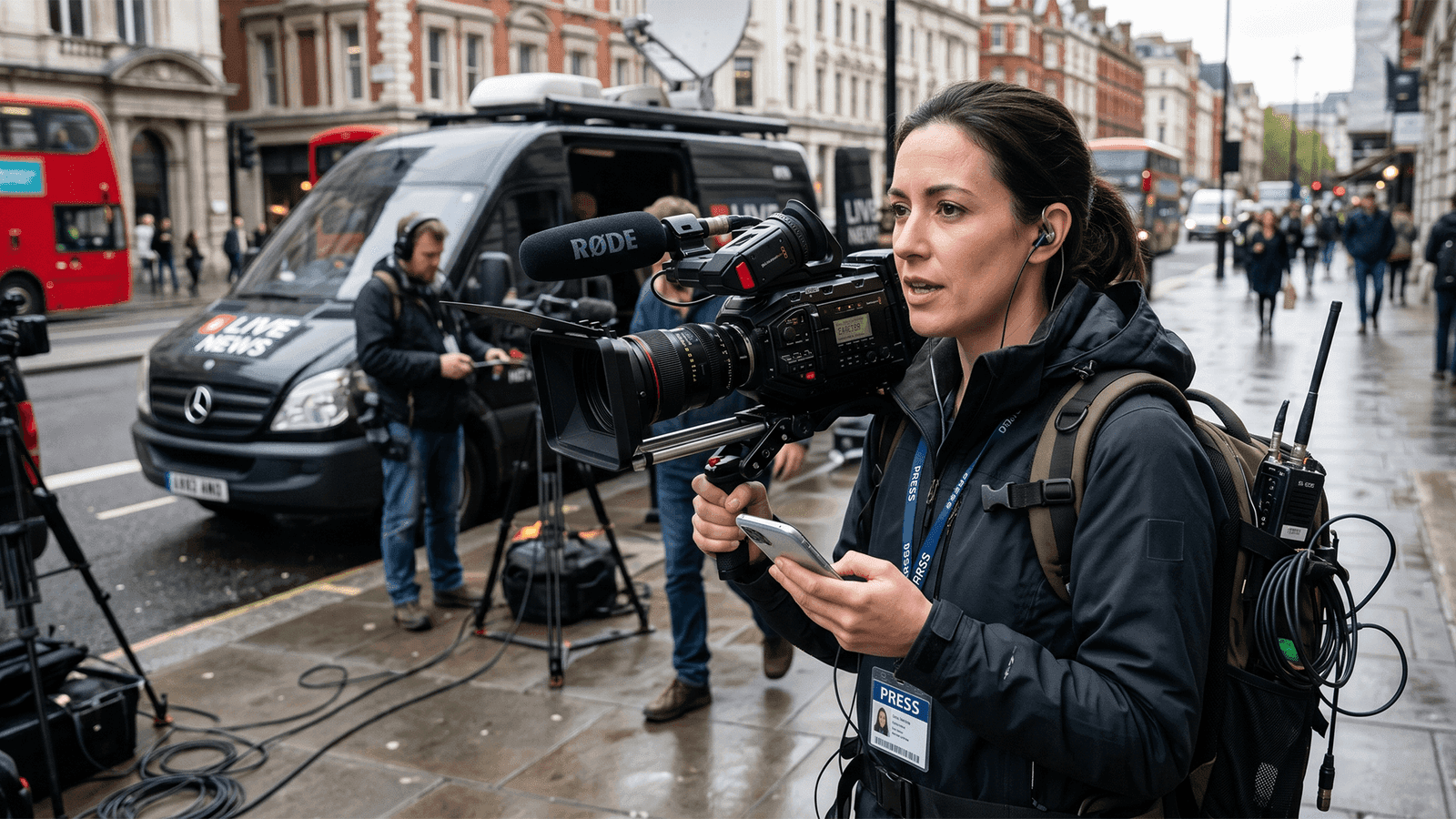
Journalism has always asked people to show up. but what happens when things go wrong?
Editors send journalists into protests, courtrooms, crime scenes, breaking news situations and unpredictable environments every day.
That reality is deeply woven into journalism itself. Reporting has always depended on people being present where events unfold, asking difficult questions, witnessing moments firsthand, and bringing stories back to the public.
But while journalism has evolved dramatically over the years, one uncomfortable question has remained surprisingly underexplored.
When something goes wrong in the field, what actually happens next?
For all the conversations shaping modern media today around AI, audience growth, digital transformation, sustainability, and newsroom innovation, journalist safety often remains in the background. Most organisations recognise its importance. Far fewer stop to examine whether the systems supporting journalists actually reflect the realities of how reporting happens today.
In many newsrooms, safety still relies on habits rather than structure. A location pin sent in a WhatsApp group. A quick text before heading into an assignment. An informal understanding that someone will notice if updates stop coming through.
Most days, that feels sufficient. But safety should not only appear effective because nothing went wrong.
The reality of reporting has changed faster than operations
Journalism has never been predictable, but reporting environments today move differently.
Stories develop faster. Teams operate leaner. Journalists are expected to work across formats, move quickly between assignments, and produce under increasing pressure. Remote reporting, distributed teams, and freelance contributions have become central to how many organisations operate.
At the same time, the environments journalists enter are becoming harder to anticipate.
A routine assignment can change quickly. A peaceful demonstration can escalate. A local event can attract public tension. Conditions can shift in minutes, often without warning.
This unpredictability is becoming normal.
And yet while editorial workflows continue to modernise, newsroom safety practices often remain largely unchanged.
There is no shortage of investment in publishing systems, analytics, editorial technology, and audience growth. But operational visibility into journalist safety can still be surprisingly limited.
Many organisations cannot confidently answer simple questions in real time.
Where is the reporter now? Who is expecting updates? Who notices if communication stops? What happens next?
The hidden gap between policy and practice

Most news organisations already have some form of safety guidance.
The challenge is that having a policy and having a working system are not always the same thing.
A written protocol does not automatically create preparedness. A risk assessment form does not guarantee active monitoring. Emergency contacts do not become an escalation plan unless responsibilities are clear and people know what actions to take.
That gap between intention and execution is where uncertainty often appears.
Imagine a familiar newsroom scenario.
A reporter heads out to cover breaking developments. An editor assumes updates will come in. The reporter assumes someone knows where they are. Another colleague believes somebody else is keeping track.
Everyone assumes there is a system. Until suddenly, everyone realises there may not be one. That is why the difficult questions matter.
Would your newsroom know where your reporter is during breaking news?
If communication stopped unexpectedly, who would respond?
These questions may sound operational, but they reveal something much deeper about how organisations think about care, accountability, and leadership.
What recent industry trends are telling us
The increase in journalist fatalities and serious incidents globally between 2022 and 2024 has brought renewed attention to a reality the industry already understands but does not always openly discuss.
Journalism remains a profession exposed to real-world risk.
Importantly, those risks are not confined to conflict zones or international reporting. Local journalism can carry significant unpredictability too. Journalists covering protests, public disorder, crime, elections, weather events, and emotionally charged stories increasingly navigate environments where conditions can change quickly.
Alongside physical risk, the profession is also adapting to new pressures.
Online hostility increasingly spills into offline interactions. Reporters work independently more often. Smaller teams mean fewer layers of support. Freelancers continue to play a vital role in coverage while often operating without the same structures available to permanent newsroom staff.
None of this means journalism has become unsustainable.
But it does raise an important question. Have newsroom systems evolved at the same pace as journalism itself?
Why safety conversations often come too late
One reason these conversations remain difficult is because journalism is built around urgency.
Newsrooms are designed to move quickly. Teams adapt constantly. People solve problems in real time.
That ability is one of journalism’s greatest strengths. But it can also create blind spots.
Safety discussions often begin after something has already happened. After a communication breakdown. After someone raises concerns. After a close call that prompts reflection.
By then, preparation becomes hindsight.
Strong newsroom culture does not emerge during difficult moments.
It is built before them. The strongest organisations are not necessarily the ones that never encounter challenges. They are the ones that prepare thoughtfully and respond with clarity.
Journalist safety is also a leadership conversation
It is easy to position journalist safety as a wellbeing discussion.
But increasingly, it is also a conversation about leadership, editorial responsibility, and sustainable newsroom culture.
News organisations ask journalists to make difficult decisions every day in service of informing the public. That responsibility carries an obligation to think seriously about how people are supported before, during, and after assignments.
Duty of care is not simply about compliance.
It reflects how organisations value the people producing the journalism.
When journalists feel unsupported, reporting decisions change. Confidence changes. Risk tolerance changes. Over time, culture changes too.
Protecting journalists is not separate from protecting journalism.
The strongest reporting environments are often built on clarity, communication, preparation, and trust.
Moving from awareness to action
Improving journalist safety does not always require complex infrastructure or large operational teams.
Often, progress begins with simple but important questions.
Who owns communication? What triggers escalation? How are freelancers supported?
What information should editors have before assigning coverage?
How visible is the reporting process once somebody leaves the newsroom?
The goal is not removing uncertainty completely.
The goal is reducing avoidable risk and creating systems that support better decisions.
Introducing PressHop® Talks

These questions sit at the centre of the upcoming PressHop® Talks webinar:
The Safety Crisis Nobody in Media Wants to Talk About
This session is designed as an open and honest industry conversation.
Not a sales discussion.
Not a fear-driven conversation.
But an opportunity to explore where newsroom safety stands today and what practical improvements may look like across organisations of different sizes.
Joining the conversation is Marcela Kunova, Managing Director, JournalismUK.
With extensive experience across newsroom leadership, editorial strategy, digital transformation, and helping publishers navigate change, Marcela brings a perspective grounded in both strategy and operational reality.
The discussion will explore not only where the industry is falling short, but also what practical action can look like.
What attendees will learn
During the webinar, attendees will explore:
The biggest physical safety risks journalists face today
What effective newsroom safety protocols actually look like
Where the industry continues to fall short
Duty of care responsibilities for freelancers and contributors
Practical actions editors and publishers can implement immediately
How organisations can move from reactive responses to stronger preparation
Whether you lead a newsroom, assign reporting, manage editorial operations, or work independently in the field, the conversation is designed to offer practical ideas that can be applied immediately.
Join the conversation
Journalism depends on people showing up.
People who travel, observe, question, verify, document, and bring stories back to audiences.
If journalism matters, the people behind it matter too.
The conversation around journalist safety cannot remain reactive.
Register now for this free live webinar and join the conversation: https://luma.com/uao0k8bu